


- All
- Bearing technology

- Linear technology

- Gaskets and seals

- Electric cylinders - actuators

- Industrial wheels & castors

- Standard Elements

- Electric motors

- Gearboxes

- Chains and Sprockets

- Belts

- Pulleys

- Gears and Gear Racks

- Transmission couplings

- Clamping Elements

- Engineering plastics

- Technical rubber

- Hand tools

- Purpose tools

- Workshop equipment

- Measuring tools

- LED work lights

- Pneumatic gauges

- Preparation and regulation of compressed air

- Pneumatic cylinders

- Pneumatic valves

- Accessories

- Cleaning products

- Adhesives

- Adhesive sealants

- Fillers and coatings

- Dosing equipment

- Industrial lubricants

- Vehicles and construction machine lubricants

- Lubricants for garden machinery

- Nautical lubricants

- Metalworking lubricants

- Greases and pastes

- Lubrication equipment

- Oil analysis

- Promotions and discounts
- Machine elementsCategoriesBearing technologyLinear technologyGaskets and sealsElectric cylinders - actuatorsIndustrial wheels & castorsStandard Elements
- Show all
- Retaining Rings – Circlips
- Dowel Pins
- Spring Pins
- Rubber Dampers
- Leveling Feet
- Fasteners
- Handwheels, Crank Handles
- Clamping Levers, Tension Levers
- Fixed, Rotating and Folding Handles
- Gripping Handles
- Industrial Hinges
- Control Handles
- Quick Clamps, Power Clamps, Tension Latches
- Indexing Elements
- Latches
- Adjustment Elements, Rotating Knobs, Adjustment Slides
- Magnets
- Rotary Controls
- Other Standard Machine Elements
- Promotions and discounts
Rolling bearings- Show all
- Deep groove ball bearings
- Angular contact ball bearings
- Spindle bearings
- Four-point contact ball bearings
- Self-aligning ball bearings
- Cylindrical roller bearings
- Tapered roller bearings
- Spherical roller bearings
- Needle roller bearings
- Inner rings
- Axial deep groove ball bearings
- Axial cylindrical roller bearings
- Axial needle roller bearings
- Axial spherical roller bearings
- Crossed roller bearings
- Track rollers
- Bearings for screw drives
- Precision bearings for combined loads
Housing unitsBearing housingsOther bearingsAccessoriesLinear guidesBall screws - spindlesLinear round shaftLinear modulesOtherRadial shaft seals and accessoriesHydraulic sealsBraided packingsMechanical sealsV-ring and other axial sealsX-ring sealsDC electric actuatorsAccessories for actuatorsGeneral purpose castorsCastors for rough floorsHeavy duty castorsStainless steel castorsCastors for mobile waste containersTemperature resistance castorsInstitutional castors and wheelsFurniture castors and wheelsRetaining Rings – CirclipsDowel PinsSpring PinsRubber DampersLeveling FeetFastenersHandwheels, Crank HandlesClamping Levers, Tension LeversFixed, Rotating and Folding HandlesGripping HandlesIndustrial HingesControl HandlesQuick Clamps, Power Clamps, Tension LatchesIndexing ElementsLatchesAdjustment Elements, Rotating Knobs, Adjustment SlidesMagnetsRotary ControlsOther Standard Machine Elements - Power transmissionCategoriesElectric motorsGearboxesChains and SprocketsBeltsPulleysGears and Gear RacksTransmission couplingsClamping ElementsSingle phase induction motorsThree phase induction motorsMotor mountingFrequency inverter regulatorsGearbox accessoriesWorm gear boxesPlanetary gearboxesHelical and helical bevel gearboxesVariatorsGeared motorsGall ChainsLeaf ChainsChain LinksSprocketsChain TensionersChain GuidesChain TightenersV-beltsTiming beltsPoly V-beltVariator beltsAutomotive beltsAgricultural beltsBelt profiles for drive and transportFlat beltsConnecting plates for timing beltsV-Belt PulleysTiming Belt PulleysTiming Belt BarsFlanges for Timing Belt PulleysRibbed PulleysVariator PulleysGear RacksBevel GearsCylindrical GearsJaw couplingsElastomer couplingsChain couplingsRigid shaft couplingsRubber tyre couplingsGear couplingsCardan couplingsTaper Lock BushingsHubs for TL BushingsScrews for TL BushingsClamping Rings
- Technical plastics and rubberCategoriesEngineering plasticsTechnical rubberPE plastics (polyethylene)PA plastics (Nylon)POM plasticsPP plasticsPTFE plasticsPET plasticsPEEK plasticsPVDF plasticsPSU plasticsRubber with a smooth surfacePatterned rubber flooringStable rubber flooring
- ToolsHand toolsPurpose toolsWorkshop equipmentMeasuring toolsScrewdriversWrenches and RatchetsPliersKnives, blades and sawspoints, chisels and punchesHammersLeversThreading drillsTool setsDrilling machinesHydraulic liftsWheelbarrowsBearing toolsDiagnostics instrumentsTools for seals & gasketsTools for beltsTools for chainsLiner stripsTools for conveyor beltsOther toolsWork glovesWarehouse boxesMarkers and marker coloursZinc spraysAcrylic coloursLeak detectorsTrolleys, cases and tool bagsOther workshop equipmentMeters and gaugesMeasuring slipsOther measuring toolsHand lampsHeadlampsLED floodlightsLED headlights
- PneumaticsCategoriesPreparation and regulation of compressed airPneumatic cylindersPneumatic valvesAccessoriesPneumatic gaugesAccessories for pneumatic gaugesCompressed air service systemsFilter regulatorsPressure regulatorsOilersFiltersHosesFittings and connectorsHose clampsCompressed air gunsNoise dampersVacuum technology
- Cleaners and adhesivesCleaning productsAdhesivesAdhesive sealantsFillers and coatingsDosing equipmentBrake cleanersIndustrial cleaners and degreasersRemoversContact spraysSurface preparation productsAbsorption agentsHand cleanersAutocosmeticsBolt guardsAdhesives for joining cylindrical partsQuick-setting adhesivesUniversal adhesivesAcrylic adhesivesEpoxy adhesivesPolyurethane adhesivesHybrid adhesivesPurpose adhesivesUV adhesivesActivators and primers for adhesivesAdhesive tapesThread sealsSiliconesElastic sealantsLiquid gaskets for flangesLiquid metalsEpoxy coatingsMixing pointsDosing needlesDosing gunsOther dosing equipment
- Lubricants and equipmentCategoriesIndustrial lubricantsVehicles and construction machine lubricantsLubricants for garden machineryNautical lubricantsMetalworking lubricantsGreases and pastesLubrication equipmentOil analysisHydraulic oilsSlideway and sliding oilsIndustrial gear oilsCompressor oilsCirculating oilsHeat transfer oilsChain lubricantsGas engine oilsMultipurpose lubricantsRelease agentsUniversal silicone oilsOther lubricantsEngine oilsGearbox and differential oilsUniversal tractor and construction machine oilsFunctional liquidsOther agents for vehicle maintenanceEngine oils for garden machineryOils for chainsaw chainsMarine engine oilsOther marine lubricantsPenetrating oilsCorrosion protective agentsWelding agentsCutting agentsEmulsions for metalworkingPunching oilsOils for transformationErosion fluidQuenching oilsAdditives for emulsionsGrease equipmentOil equipmentAdBlue equipmentEquipment for chemicals
Linear Technology – Linear Guides, Rail Systems and Precision Motion Solutions
(213)
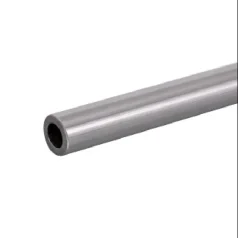
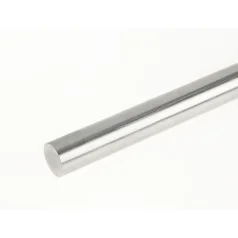
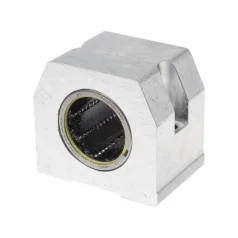
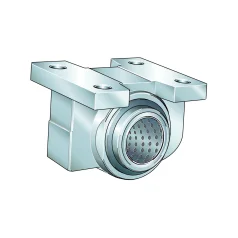
Displayed 20 from 213 products
Show more productsReliable Linear Technology for Industrial Automation and Machine Building
At M&M Intercom, we provide premium linear technology designed for precise, repeatable and reliable mechanical motion. Our range includes high-quality linear guides, profile rail guides, ball screws, trapezoidal screws, round shafts and complete linear modules for axis assembly.
Modern production systems, CNC machines, robotic cells and automated lines require high mechanical precision. Properly selected linear technology is therefore essential for stable operation, minimal friction and long service life.
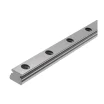
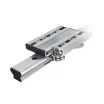
Profile Rail Guides – The Foundation of Precise Linear Motion
Profile rail guides form the basis of professional linear systems. These are profiled rails along which carriages with integrated rolling elements move. Such systems provide:
- high load capacity
- minimal friction
- precise positioning
- motion repeatability
- long service life
They are used in CNC machining centers, packaging lines, automated systems, laser machines and specialized industrial equipment.
It is important to note that carriages from different manufacturers are not mutually compatible, as they use specific profiles. In replacement cases, it is often necessary to replace the complete set – both the rail and the carriage.
Key selection parameters include:
- load capacity
- preload (clearance)
- accuracy class
- operating environment
Correctly dimensioned linear guides ensure optimal system rigidity and stable operation even under high dynamic loads.
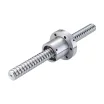
Ball Screws – Efficient Conversion of Rotary to Linear Motion
Ball screws provide highly efficient conversion of rotational motion into linear movement. Due to rolling contact between balls and thread, they achieve high efficiency and low friction.
Advantages include:
- high positioning accuracy
- low wear
- high transmission efficiency
- suitability for servo drives
This solution is ideal for applications requiring high repeatability and precision, such as CNC machines and automated handling systems. We also offer machining of screw ends according to technical documentation.
Trapezoidal Screws – Robustness and Simplicity
For robust and slower applications, trapezoidal screws are suitable. Compared to ball screw systems, they offer greater mechanical resistance and represent a cost-effective solution for applications such as:
- lifting tables
- linear actuators
- industrial lifts
- mechanical positioning systems
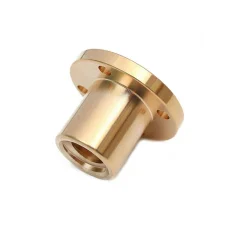
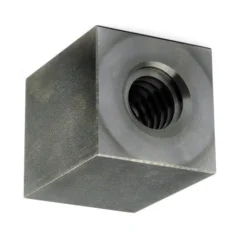
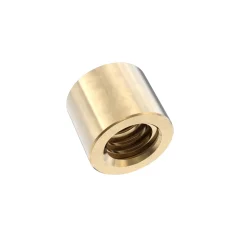
Trapezoidal nuts are available in various materials, enabling adaptation according to load and application requirements.
Round Shafts and Linear Bushings
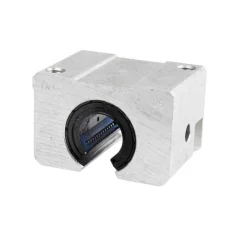
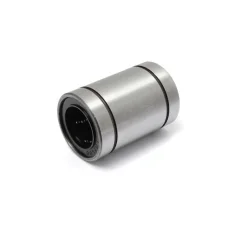
Round shafts represent a basic solution for linear guidance. They are used in lighter applications, manual systems and simple mechanical constructions.
Combined with linear ball bushings, they provide:
- smooth movement
- easy installation
- length adaptability
- cost-effective solutions
Such linear technology is suitable for less demanding applications where high rigidity of profiled rail guides is not required.
Linear Modules – Ready-to-Install Axis Solutions
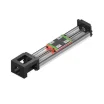
For faster system integration, we also provide linear modules including the guide, screw and often an integrated nut or carriage. These are modular systems enabling quick assembly of linear axes.
Advantages of linear modules:
- reduced assembly time
- verified component compatibility
- drive integration possibility
- compact construction
Such units are suitable for automated lines, robotic applications and industrial manipulators.
Additional Linear Technology Components
In addition to core components, our linear technology range includes:
- support and mounting elements
- end nuts
- system accessories
- protective components
- special versions for specific applications
A comprehensive approach enables optimization of the entire linear system, not just individual components.
Modularity and System Compatibility
One of the key advantages of modern linear technology is modular design. Standardized elements allow fast assembly and adaptation. However, during replacement, manufacturer specifications must be carefully considered, as profiles, preload classes and tolerance grades differ.
When replacing components, it is important to verify:
- exact guide type
- carriage designation
- accuracy class
- mounting hole dimensions
With the correct approach, uninterrupted system operation can be ensured without additional modifications.
Trusted Linear Technology Manufacturers
Our range includes products from recognized brands such as:
Bosch Rexroth, Hiwin, TOCO and others.
These manufacturers provide high quality, repeatability and mechanical stability, essential for professional linear technology solutions.
Expert Advice and Custom Modifications
At M&M Intercom, we provide not only products but also professional support in selecting suitable linear guides, profile rails, screws and modules according to load, speed, stroke and application requirements.
We also offer:
- cutting of profile rail guides
- machining of ball and trapezoidal screw ends
- assistance in replacing incompatible systems
- technical support in axis design
Whether building a new machine or upgrading an existing system, we help you select the optimal linear technology solution for reliable, precise and long-term performance.
Frequently Asked Questions About Linear Technology
1. What does linear technology include and where is it used?
Linear technology includes all components enabling precise linear motion – linear guides, profile rail guides, carriages, ball screws, trapezoidal screws, round shafts, linear bushings and complete linear modules. It is used in CNC machining centers, robotic systems, automated lines, packaging machines, measuring devices and specialized industrial applications where precision, repeatability and rigidity are essential.
2. What is the difference between profile rail guides and round shafts?
Profile rail guides provide high rigidity, load capacity and accuracy, suitable for dynamic and heavily loaded applications such as CNC machines. Round shafts are a simpler and more cost-effective solution for less demanding applications where loads are lower and high rigidity is not required.
3. How to select linear guides based on load?
When selecting linear guides, the following must be considered:
- static and dynamic load capacity
- load direction (radial, axial, moment)
- stroke length
- travel speed
- operating environment
Incorrectly dimensioned rail guides may cause increased wear, vibration or premature system failure. Load and service life calculations are recommended.
4. Are carriages from different manufacturers compatible?
No. Carriages and profile rails from different manufacturers are not mutually compatible due to specific profiles and tolerance classes. In many cases, the complete set – rail and carriage – must be replaced. Exact manufacturer and model identification is essential.
5. What does preload mean in profile rail guides?
Preload defines internal clearance between the carriage and rail. Higher preload increases rigidity and reduces vibration but also increases friction. Proper preload class selection is crucial for positioning accuracy and service life.
6. What is the difference between ball screws and trapezoidal screws?
Ball screws provide high efficiency (up to 90%), low friction and high accuracy, making them suitable for servo drives and CNC applications. Trapezoidal screws are more robust and cost-effective for slower movements and higher forces but have higher friction and lower efficiency.
7. How important is system accuracy class?
Accuracy class defines permissible deviations in installation and movement. High-precision applications such as measuring systems or machining centers require higher accuracy grades. Incorrect selection may result in positioning errors and reduced machining quality.
8. How to protect linear guides from contamination?
For long service life, protection against dust, metal particles, moisture and chemicals is essential. Protective strips, covers, carriage seals and proper lubrication are used. In demanding environments, additional corrosion protection is recommended.
9. How should linear systems be properly installed?
Installation must be performed on a flat, machined surface according to manufacturer instructions. Key points include:
- correct rail alignment
- uniform bolt tightening
- application of specified torque
- parallelism verification
Incorrect installation may cause internal stress, increased friction and reduced service life.
10. How to extend the service life of linear technology?
For optimal performance, it is necessary to:
- perform regular lubrication
- monitor vibration
- inspect seals and protective elements
- replace worn parts in time
- ensure correct system dimensioning
With properly selected and maintained linear technology, including suitable profile rail guides and related components, machine downtime can be significantly reduced while improving system reliability and productivity.
E-mail: [email protected]
Phone: +386 1 29 27 960
Professional Consulting and Training
With years of market presence, expertise and experience, we find the most appropriate and cost-effective technical solution for your application.
More
Custom manufacturing of flat gaskets
Custom-made seals with precision up to 0.1 mm for all industries. High-quality materials, adaptable shapes, and fast execution. Solutions for extreme conditions.
More