- All
- Bearing technology

- Linear technology

- Gaskets and seals

- Electric cylinders - actuators

- Industrial wheels & castors

- Standard Elements

- Electric motors

- Gearboxes

- Chains and Sprockets

- Belts

- Pulleys

- Gears and Gear Racks

- Transmission couplings

- Clamping Elements

- Engineering plastics

- Technical rubber

- Hand tools

- Purpose tools

- Workshop equipment

- Measuring tools

- LED work lights

- Pneumatic gauges

- Preparation and regulation of compressed air

- Pneumatic cylinders

- Pneumatic valves

- Accessories

- Cleaning products

- Adhesives

- Adhesive sealants

- Fillers and coatings

- Dosing equipment

- Industrial lubricants

- Vehicles and construction machine lubricants

- Lubricants for garden machinery

- Nautical lubricants

- Metalworking lubricants

- Greases and pastes

- Lubrication equipment

- Oil analysis

- Promotions and discounts
- Machine elementsCategoriesBearing technologyLinear technologyGaskets and sealsElectric cylinders - actuatorsIndustrial wheels & castorsStandard Elements
- Show all
- Retaining Rings – Circlips
- Dowel Pins
- Spring Pins
- Rubber Dampers
- Leveling Feet
- Fasteners
- Handwheels, Crank Handles
- Clamping Levers, Tension Levers
- Fixed, Rotating and Folding Handles
- Gripping Handles
- Industrial Hinges
- Control Handles
- Quick Clamps, Power Clamps, Tension Latches
- Indexing Elements
- Latches
- Adjustment Elements, Rotating Knobs, Adjustment Slides
- Magnets
- Rotary Controls
- Other Standard Machine Elements
- Promotions and discounts
Rolling bearings- Show all
- Deep groove ball bearings
- Angular contact ball bearings
- Spindle bearings
- Four-point contact ball bearings
- Self-aligning ball bearings
- Cylindrical roller bearings
- Tapered roller bearings
- Spherical roller bearings
- Needle roller bearings
- Inner rings
- Axial deep groove ball bearings
- Axial cylindrical roller bearings
- Axial needle roller bearings
- Axial spherical roller bearings
- Crossed roller bearings
- Track rollers
- Bearings for screw drives
- Precision bearings for combined loads
Housing unitsBearing housingsOther bearingsAccessoriesLinear guidesBall screws - spindlesLinear round shaftLinear modulesOtherRadial shaft seals and accessoriesHydraulic sealsBraided packingsMechanical sealsV-ring and other axial sealsX-ring sealsDC electric actuatorsAccessories for actuatorsGeneral purpose castorsCastors for rough floorsHeavy duty castorsStainless steel castorsCastors for mobile waste containersTemperature resistance castorsInstitutional castors and wheelsFurniture castors and wheelsRetaining Rings – CirclipsDowel PinsSpring PinsRubber DampersLeveling FeetFastenersHandwheels, Crank HandlesClamping Levers, Tension LeversFixed, Rotating and Folding HandlesGripping HandlesIndustrial HingesControl HandlesQuick Clamps, Power Clamps, Tension LatchesIndexing ElementsLatchesAdjustment Elements, Rotating Knobs, Adjustment SlidesMagnetsRotary ControlsOther Standard Machine Elements - Power transmissionCategoriesElectric motorsGearboxesChains and SprocketsBeltsPulleysGears and Gear RacksTransmission couplingsClamping ElementsSingle phase induction motorsThree phase induction motorsMotor mountingFrequency inverter regulatorsGearbox accessoriesWorm gear boxesPlanetary gearboxesHelical and helical bevel gearboxesVariatorsGeared motorsGall ChainsLeaf ChainsChain LinksSprocketsChain TensionersChain GuidesChain TightenersV-beltsTiming beltsPoly V-beltVariator beltsAutomotive beltsAgricultural beltsBelt profiles for drive and transportFlat beltsConnecting plates for timing beltsV-Belt PulleysTiming Belt PulleysTiming Belt BarsFlanges for Timing Belt PulleysRibbed PulleysVariator PulleysGear RacksBevel GearsCylindrical GearsJaw couplingsElastomer couplingsChain couplingsRigid shaft couplingsRubber tyre couplingsGear couplingsCardan couplingsTaper Lock BushingsHubs for TL BushingsScrews for TL BushingsClamping Rings
- Technical plastics and rubberCategoriesEngineering plasticsTechnical rubberPE plastics (polyethylene)PA plastics (Nylon)POM plasticsPP plasticsPTFE plasticsPET plasticsPEEK plasticsPVDF plasticsPSU plasticsRubber with a smooth surfacePatterned rubber flooringStable rubber flooring
- ToolsHand toolsPurpose toolsWorkshop equipmentMeasuring toolsScrewdriversWrenches and RatchetsPliersKnives, blades and sawspoints, chisels and punchesHammersLeversThreading drillsTool setsDrilling machinesHydraulic liftsWheelbarrowsBearing toolsDiagnostics instrumentsTools for seals & gasketsTools for beltsTools for chainsLiner stripsTools for conveyor beltsOther toolsWork glovesWarehouse boxesMarkers and marker coloursZinc spraysAcrylic coloursLeak detectorsTrolleys, cases and tool bagsOther workshop equipmentMeters and gaugesMeasuring slipsOther measuring toolsHand lampsHeadlampsLED floodlightsLED headlights
- PneumaticsCategoriesPreparation and regulation of compressed airPneumatic cylindersPneumatic valvesAccessoriesPneumatic gaugesAccessories for pneumatic gaugesCompressed air service systemsFilter regulatorsPressure regulatorsOilersFiltersHosesFittings and connectorsHose clampsCompressed air gunsNoise dampersVacuum technology
- Cleaners and adhesivesCleaning productsAdhesivesAdhesive sealantsFillers and coatingsDosing equipmentBrake cleanersIndustrial cleaners and degreasersRemoversContact spraysSurface preparation productsAbsorption agentsHand cleanersAutocosmeticsBolt guardsAdhesives for joining cylindrical partsQuick-setting adhesivesUniversal adhesivesAcrylic adhesivesEpoxy adhesivesPolyurethane adhesivesHybrid adhesivesPurpose adhesivesUV adhesivesActivators and primers for adhesivesAdhesive tapesThread sealsSiliconesElastic sealantsLiquid gaskets for flangesLiquid metalsEpoxy coatingsMixing pointsDosing needlesDosing gunsOther dosing equipment
- Lubricants and equipmentCategoriesIndustrial lubricantsVehicles and construction machine lubricantsLubricants for garden machineryNautical lubricantsMetalworking lubricantsGreases and pastesLubrication equipmentOil analysisHydraulic oilsSlideway and sliding oilsIndustrial gear oilsCompressor oilsCirculating oilsHeat transfer oilsChain lubricantsGas engine oilsMultipurpose lubricantsRelease agentsUniversal silicone oilsOther lubricantsEngine oilsGearbox and differential oilsUniversal tractor and construction machine oilsFunctional liquidsOther agents for vehicle maintenanceEngine oils for garden machineryOils for chainsaw chainsMarine engine oilsOther marine lubricantsPenetrating oilsCorrosion protective agentsWelding agentsCutting agentsEmulsions for metalworkingPunching oilsOils for transformationErosion fluidQuenching oilsAdditives for emulsionsGrease equipmentOil equipmentAdBlue equipmentEquipment for chemicals


Bosch Rexroth ball transfer units – a small element with a big role in moving loads
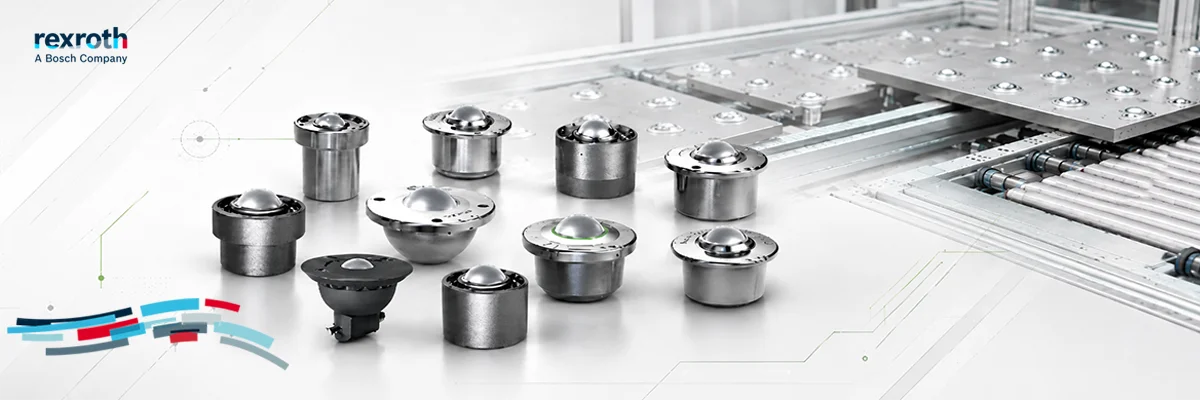
Ball transfer units are used on worktables, assembly lines, feed systems, turning stations, packaging lines and other structures where a load must be moved with low resistance and without a complex drive system.
What is a ball transfer unit?
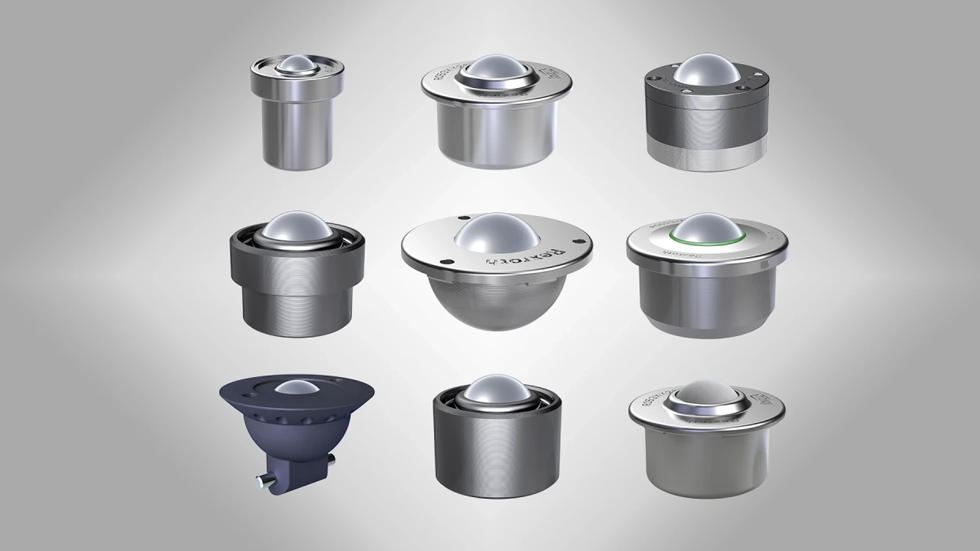
A ball transfer unit is a mechanical element with a main load-bearing ball housed in a casing and supported by smaller balls. This design allows the load to move in any direction – forward, backward, sideways, diagonally or by rotating on the spot.
Thanks to its compact design, it can be installed directly into work surfaces, roller tables, transfer modules or special fixtures for material handling. When selected correctly, it reduces friction, makes load positioning easier and reduces operator effort when manually moving heavier parts.
4 key points when selecting a ball transfer unit
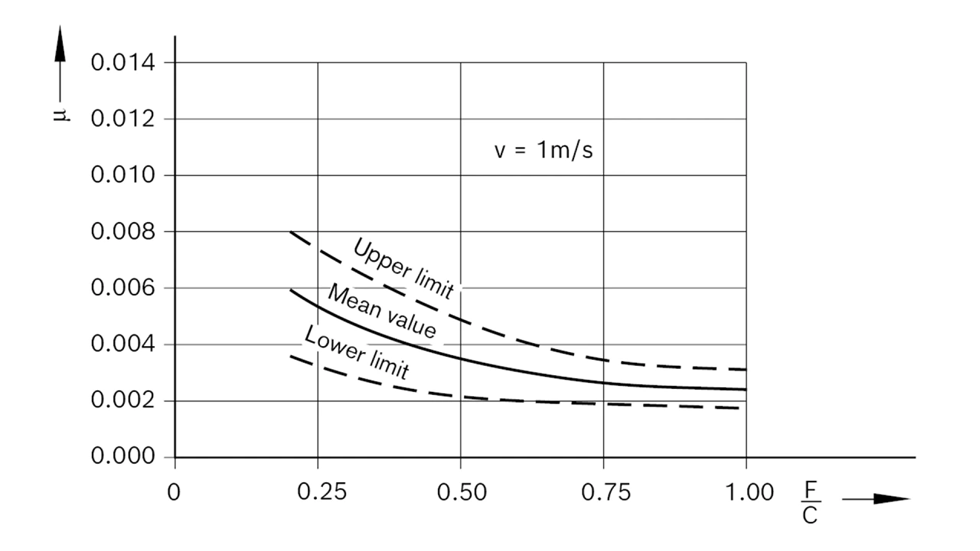
1. Friction and travel speed
The first step in selection is to define the load weight, required movement speed and handling method. Heavy plates, tools or containers require different dimensioning than smaller parts moved manually by an operator.
A lower coefficient of friction means easier movement and less pushing force. Bosch Rexroth ball transfer units are supported by friction diagrams that make it easier to select the right version according to load and speed.
2. Installation position and mounting method
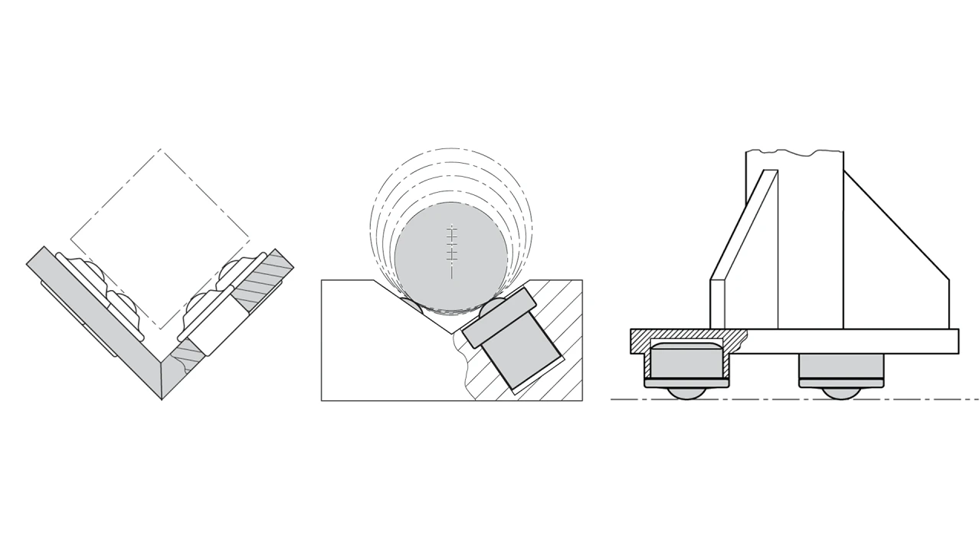
The most common installation position is with the load-bearing ball facing upward, but inclined, side-mounted and inverted installations are also used in practice. Bosch Rexroth ball transfer units are designed for these positions as well, so they can be used in a wide range of structural solutions.
The mounting method depends on the design of the table or support structure. Units can be pressed into bores, bonded or secured with a tolerance ring. Versions with spring-loaded locking elements further simplify installation and removal during maintenance.
3. Operating conditions
Ball transfer units are often used in environments where dust, emulsions, oils, moisture or fine particles from the production process are present. Selection should therefore consider not only the weight of the load, but also the operating environment.
Many Bosch Rexroth versions have oiled felt seals that reduce the ingress of contaminants into the assembly. In applications with larger temperature fluctuations, the operating temperature range should also be checked and a version selected that matches the actual working conditions.
4. Load capacity and planned service life
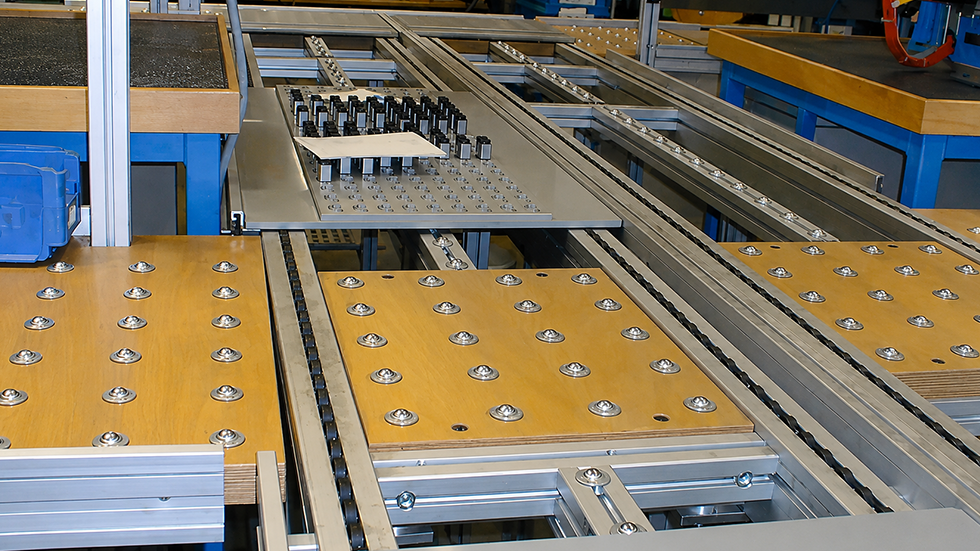
Correct selection does not depend only on the maximum permissible load. The number of installed ball transfer units, their arrangement under the load, the shape of the underside surface and the way the load is applied are also important.
With an even underside surface, the load is more easily distributed across several support points. For uneven parts or point loads, the selection should be checked in more detail. Bosch Rexroth provides data for calculating service life for individual types and sizes, which helps with maintenance and replacement planning.
Where are ball transfer units most commonly used?
Ball transfer units are used wherever a load needs to move across a flat surface with low resistance and the option to change direction. The most common applications are:
- Work and assembly tables for sheet metal, profiles, tools and workpieces.
- Infeed and outfeed tables on saws, presses, cutting machines and machining centres.
- Transport of plates, bins, containers and larger parts in logistics.
- Positioning of heavier parts before machining, assembly or inspection.
- Turning and handling stations in production lines.
- Auxiliary structures for manual material handling.
Why choose Bosch Rexroth ball transfer units?
Bosch Rexroth is a recognised manufacturer of components for linear motion technology, automation and industrial systems. With ball transfer units, the advantage lies in clearly defined technical data, different installation options and a wide range of versions for different loads.
All of this helps designers, maintenance teams and machine builders select the right component for a specific application. A correctly selected ball transfer unit reduces movement resistance, simplifies load handling and contributes to an organised material flow in production.
Bosch Rexroth at M&M Intercom
At M&M Intercom, we supply Bosch Rexroth components for industrial use, including solutions from the fields of linear motion technology and material transport. We support selection according to load weight, the underside surface of the workpiece, installation method, travel speed and working conditions.
Related content
- Bosch Rexroth linear technology – advanced solutions for industry
- Linear technology – online shop
- Bosch Rexroth – brand page
- Bosch Rexroth ball transfer units
- NEW – Bosch Rexroth linear technology: advanced solutions for industry
- Profile rail guides or round guides – which should you choose for your application?
Source: https://www.boschrexroth.com/en/de/blog

DO YOU NEED ADVICE WHEN SELECTING A BALL TRANSFER UNIT?
When selecting a ball transfer unit, it is important to define the load, the arrangement of support points and the operating conditions correctly. The M&M Intercom team can help you choose the right version for your application.